In this article18 sections
A bedroom rug does three things: it softens the space, adds warmth underfoot, and makes the room feel finished. A rug that is the wrong size or in the wrong position does the opposite — it makes the room look smaller and the layout feel unresolved.
These ideas cover the specific decisions that make a bedroom rug work — size, placement, material, and style — with practical guidance for every room type.
1. Size the Rug Correctly
The most common bedroom rug mistake is choosing a rug that is too small. The rug should extend at least 18 inches beyond the sides and foot of the bed. For a double bed, that means a minimum of 8 x 10 feet. For a king, 9 x 12 feet.
A small rug floating in the middle of the floor makes the room look smaller, not larger.
2. Place the Rug So Both Feet Land on It
When getting out of bed, both feet should land on the rug. This is the practical test for correct placement. If the rug only covers the area at the foot of the bed, it is in the wrong position.
The rug should sit under the lower two-thirds of the bed, not just at the foot.
3. Use a Low-Pile Wool Rug
Low-pile wool is the most practical material for a bedroom rug. It is soft underfoot, durable, easy to vacuum, and does not trap as much dust as a high-pile rug. It also looks better for longer than synthetic alternatives.
Avoid shag rugs in bedrooms — they trap dust, are hard to clean, and flatten quickly.
4. Try a Flatweave Rug for a Modern Look
A flatweave rug — kilim, dhurrie, or a simple woven cotton — is lighter, easier to clean, and less expensive than a pile rug. It works well in a modern or minimal bedroom.
Flatweave rugs can slip on hard floors — use a non-slip underlay.
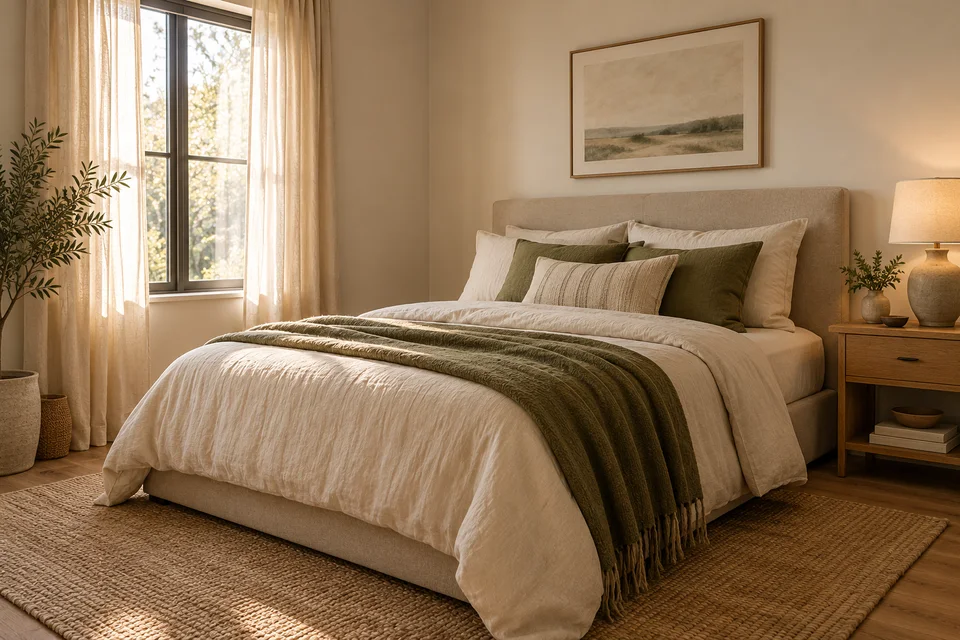
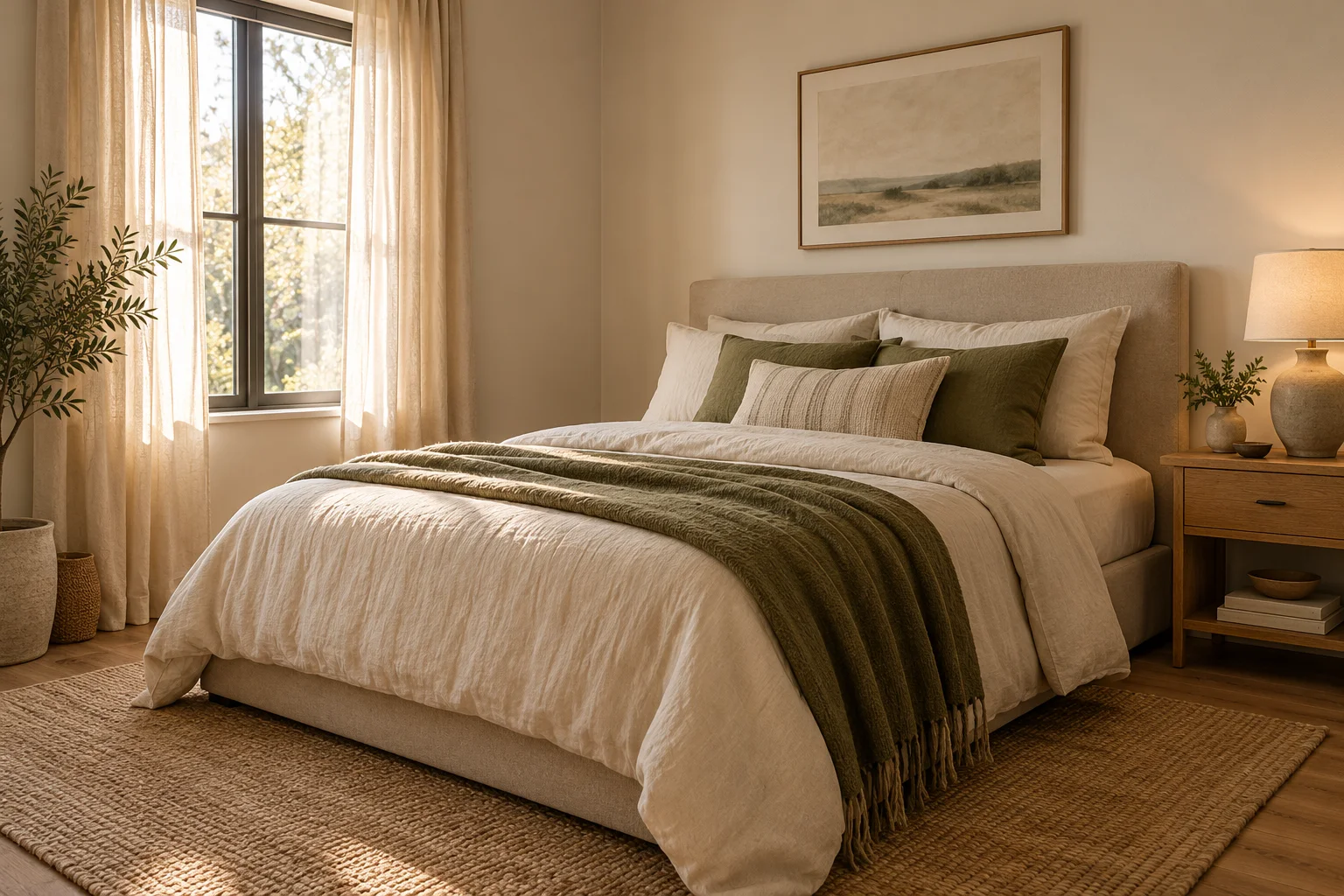
5. Use a Jute or Sisal Rug for a Natural Look
A jute or sisal rug adds a natural, textural quality that suits a neutral or earthy bedroom. It is durable and relatively inexpensive.
Jute and sisal are rougher underfoot than wool — they work best in rooms where the rug is more decorative than functional.
6. Choose a Neutral Rug for Longevity
A neutral rug — cream, oatmeal, warm grey, or natural — works with almost every color scheme and is easier to update around than a patterned or brightly colored one.
A neutral rug also makes the room feel larger than a dark or heavily patterned one.
7. Use a Patterned Rug as the Room’s Focal Point
A patterned rug — a Persian, a geometric, or a bold abstract — can be the focal point of a simple bedroom. Keep the rest of the room calm and let the rug do the work.
Choose a pattern with colors that appear elsewhere in the room — in the bedding, curtains, or art.
8. Layer Two Rugs for a Bohemian Look
Layering a smaller patterned rug over a larger neutral one adds depth and a relaxed, layered quality. Use a flatweave or kilim as the top layer over a jute or sisal base.
The top rug should be roughly half the size of the bottom one.
9. Use a Round Rug for a Softer Look
A round rug in a bedroom with a lot of straight lines and rectangular furniture adds a soft, unexpected quality. Place it at the foot of the bed or in a reading corner.
A round rug works best as an accent rather than the main rug under the bed.
10. Choose a Dark Rug for Warmth and Drama
A dark rug — charcoal, navy, forest green, or deep burgundy — adds warmth and drama to a light bedroom. It also hides dirt better than a light rug.
A dark rug on a light floor creates a strong contrast that grounds the room.
11. Use a Vintage or Antique Rug
A vintage or antique rug adds character and warmth that a new rug cannot replicate. The faded colors and worn texture suit almost every bedroom style.
Vintage rugs are often available at lower prices than new rugs of the same quality.
12. Add a Non-Slip Underlay
A non-slip underlay prevents the rug from moving on hard floors and adds a layer of cushioning. It also extends the life of the rug by reducing wear on the back.
Choose an underlay that is slightly smaller than the rug so it does not show at the edges.
13. Use a Runner on Each Side of the Bed
Two runners — one on each side of the bed — are a practical alternative to a large rug in a room where a full-size rug is not practical or affordable. They provide the same underfoot warmth where it is needed most.
Choose matching runners in the same material and color.
14. Place a Small Rug in a Reading Corner
A small rug in a reading corner — under a chair and a floor lamp — defines the space and adds warmth. It does not need to match the main rug exactly, but it should complement it.
A round rug works particularly well in a reading corner.
15. Clean the Rug Regularly
A bedroom rug collects dust, skin cells, and allergens quickly. Vacuum it at least once a week and have it professionally cleaned once a year. A clean rug looks better and lasts longer.
Rotate the rug every six months to ensure even wear.
16. Use a Rug to Define the Bed Zone in an Open-Plan Room
In a studio apartment or open-plan bedroom, a rug under the bed defines the sleeping zone and separates it visually from the rest of the space. This is one of the most effective zoning tools in an open-plan layout.
Choose a rug that is large enough to extend beyond the bed on all sides.
17. Match the Rug to the Room’s Warmth Level
A warm-toned rug — cream, caramel, terracotta, or rust — suits a warm neutral bedroom. A cool-toned rug — grey, blue, or green — suits a cooler palette. Matching the rug’s warmth level to the room’s overall tone creates a cohesive look.
Test a rug sample in the room before buying — colors look different in different lighting conditions.
Final Thoughts
A bedroom rug works when it is the right size, in the right position, and in a material that suits the room’s use. Start with the size — bigger than you think — and the placement — both feet on the rug when getting out of bed. Everything else follows from those two decisions.
Save it
Pin this for your board
Use the Save button to keep this idea on Pinterest and come back when you are ready to start.