Disclosure
This article contains affiliate links. If you buy through one, we may earn a small commission at no extra cost to you. Read our fulldisclosure policy.
In this article22 sections
A small bedroom layout works when the bed, storage, and movement paths are arranged so the room is easy to use every day. Most small bedroom problems are layout problems, not size problems.
These ideas cover the specific decisions that make the biggest difference — from bed placement to furniture scale — in rooms where every inch matters.
1. Place the Bed Against the Longest Wall
In most small bedrooms, placing the long side of the bed against the longest wall opens the largest possible floor area. This is the starting point for almost every successful small bedroom layout.
Avoid placing the bed in the center of the room — it divides the space and leaves no usable area on either side.
2. Leave Clearance on the Exit Side
Leave at least 24 inches of clearance on the side of the bed you get out of most often. This is the minimum comfortable walking width. If the room is very narrow, 18 inches is workable but tight.
Measure before buying a bed frame — the frame adds 2–4 inches to the mattress dimensions on each side.
3. Keep the Window Area Clear
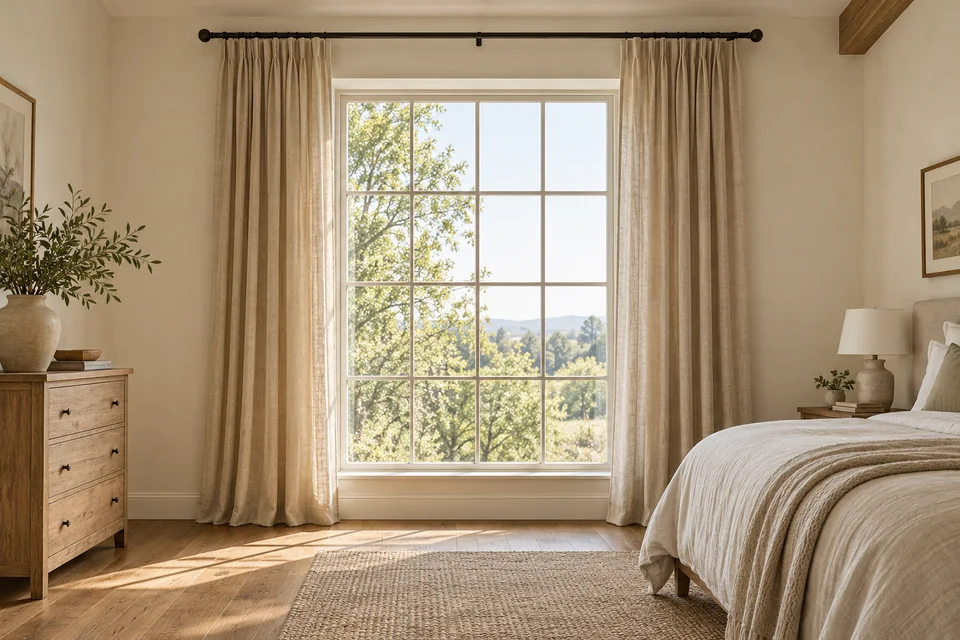
Avoid placing furniture directly in front of the window. Blocking natural light makes a small room feel significantly smaller. If the only wall for the bed is the window wall, use a low headboard that does not block the glass.
A clear window also makes the room easier to ventilate.
4. Use a Bed With Built-In Storage
A drawer bed or ottoman bed uses the space under the mattress for storage, eliminating the need for a separate chest of drawers in very small rooms. This is the most space-efficient furniture choice in a small bedroom.
Measure the room before buying — ottoman beds need clearance at the foot to lift.
5. Float the Bed Away From the Corner
In a room wide enough to allow it, floating the bed slightly away from the corner — even by 6 inches — makes the room easier to make and gives it a more considered look. It also makes it easier to change the bedding.
This works best in rooms over 100 square feet.
6. Use a Narrow Bedside Table or Wall-Mounted Shelf
A standard bedside table takes up 18–24 inches of floor space. A narrow table (12 inches deep) or a wall-mounted shelf takes up far less and keeps the floor visible.
A wall-mounted shelf also makes the floor easier to clean.
7. Place the Wardrobe on the Wall Opposite the Bed
The wall opposite the bed is usually the best place for a wardrobe — it does not block the natural light and it keeps the area around the bed clear. Sliding doors are better than hinged doors in a small room.
Measure the door swing before buying a hinged wardrobe — it needs clearance to open fully.
8. Use a Desk in the Corner
A corner desk uses the least useful part of the room and leaves the walls free for storage. A small L-shaped desk or a simple corner shelf works well in a bedroom that doubles as a home office.
Keep the desk surface clear — a cluttered desk makes the whole room feel smaller.
9. Avoid Oversized Furniture
The most common small bedroom mistake is buying furniture that is the right size for a larger room. A king bed in a 10 x 10 room leaves no usable floor space. A double or full bed in the same room leaves enough space for a wardrobe and a desk.
Measure the room and draw the layout to scale before buying anything.
10. Use Vertical Storage
Tall bookcases, floor-to-ceiling wardrobes, and wall-mounted shelves use vertical space that would otherwise be wasted. They also draw the eye upward, which makes the ceiling feel higher.
Keep the top shelves for items used less frequently.
11. Choose Furniture With Legs
Furniture with visible legs — a bed frame, a bedside table, a chair — makes the floor visible and the room feel larger. Furniture that sits directly on the floor creates a heavy, enclosed look.
Even a few inches of clearance under a piece of furniture makes a difference.
12. Use a Mirror to Expand the Space
A large mirror on the wall opposite the window reflects natural light and makes the room feel significantly larger. Use a full-length mirror or a large framed mirror rather than a small decorative one.
Position it where it reflects the window or the lightest part of the room.
13. Keep the Color Palette Light
Light walls, light bedding, and light furniture make a small room feel larger. This does not mean the room has to be all white — warm cream, soft grey, and pale sage all work well.
Use darker colors as accents in cushions, throws, and small accessories rather than on large surfaces.
14. Reduce the Number of Furniture Pieces
Every piece of furniture in a small room takes up visual space as well as physical space. Remove anything that is not used daily. A chair that holds clothes is not a chair — it is a clothes rail taking up floor space.
The fewer pieces of furniture, the larger the room feels.
15. Plan the Layout Before Moving Anything
Draw the room to scale on paper or use a free online room planner before moving furniture. This prevents the frustration of moving heavy pieces multiple times and makes it easier to see which layout works best.
Include door swings, window positions, and electrical outlets in the plan.
Final Thoughts
A small bedroom layout works when the bed is in the right position, the storage is vertical, and the floor is as clear as possible. Start with the bed placement, then work outward. Most small bedroom problems can be solved without buying anything new.
Lighting does most of the work
Every aesthetic bedroom you’ve saved has one thing in common: no harsh overhead light.
Build it from three or four small warm sources instead:
- Warm fairy lights along a wall, over the headboard, or draped down a curtain
- A bedside lamp with a fabric or paper shade
- An LED strip behind the headboard or under a floating shelf
- A small floor lamp in a corner
- Candles
2700K bulbs everywhere. This is the single most important detail. Cool white light makes every room look like an office, and no amount of styling recovers from it.
If you can, put the overhead light on a dimmer or simply stop using it after dark.
The two palettes
Baddie rooms fall into two camps. Pick one and commit.
Dark glam Black or charcoal walls, white or cream bedding, gold or chrome accents, LED accent lighting. Dramatic, photographs beautifully, needs good lighting to avoid feeling closed in.
Soft glam Cream, beige, taupe and blush, with gold hardware and lots of texture. Warmer and easier in a small room with limited light. Currently the more popular version.
Both use the same structure — the difference is only the base colour.
The clearances you actually need
You can’t cheat these, and knowing them tells you what will fit:
- 24 inches of walkway beside a bed — the absolute minimum to walk past comfortably
- 36 inches in front of a wardrobe to open doors and stand
- 30 inches in front of a chest of drawers to pull a drawer out
- 30 inches behind a desk chair to push back and stand
Bed sizes for reference:
| Bed | Size |
|---|---|
| Single | 38 x 75 inches |
| Small double | 48 x 75 inches |
| Double | 54 x 75 inches |
| Queen | 60 x 80 inches |
In a 9 x 10 foot room, a double bed leaves you about 30 inches on one side and 24 on the other. A queen leaves you almost nothing. Dropping one bed size frees more usable space than any decorating trick.
Layer the Bed Without Overstuffing It
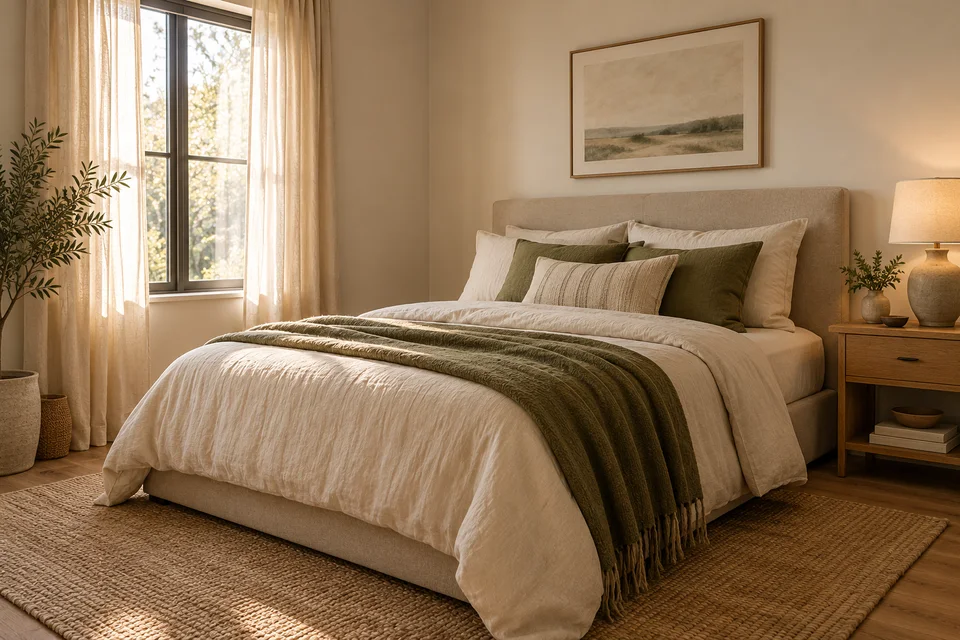
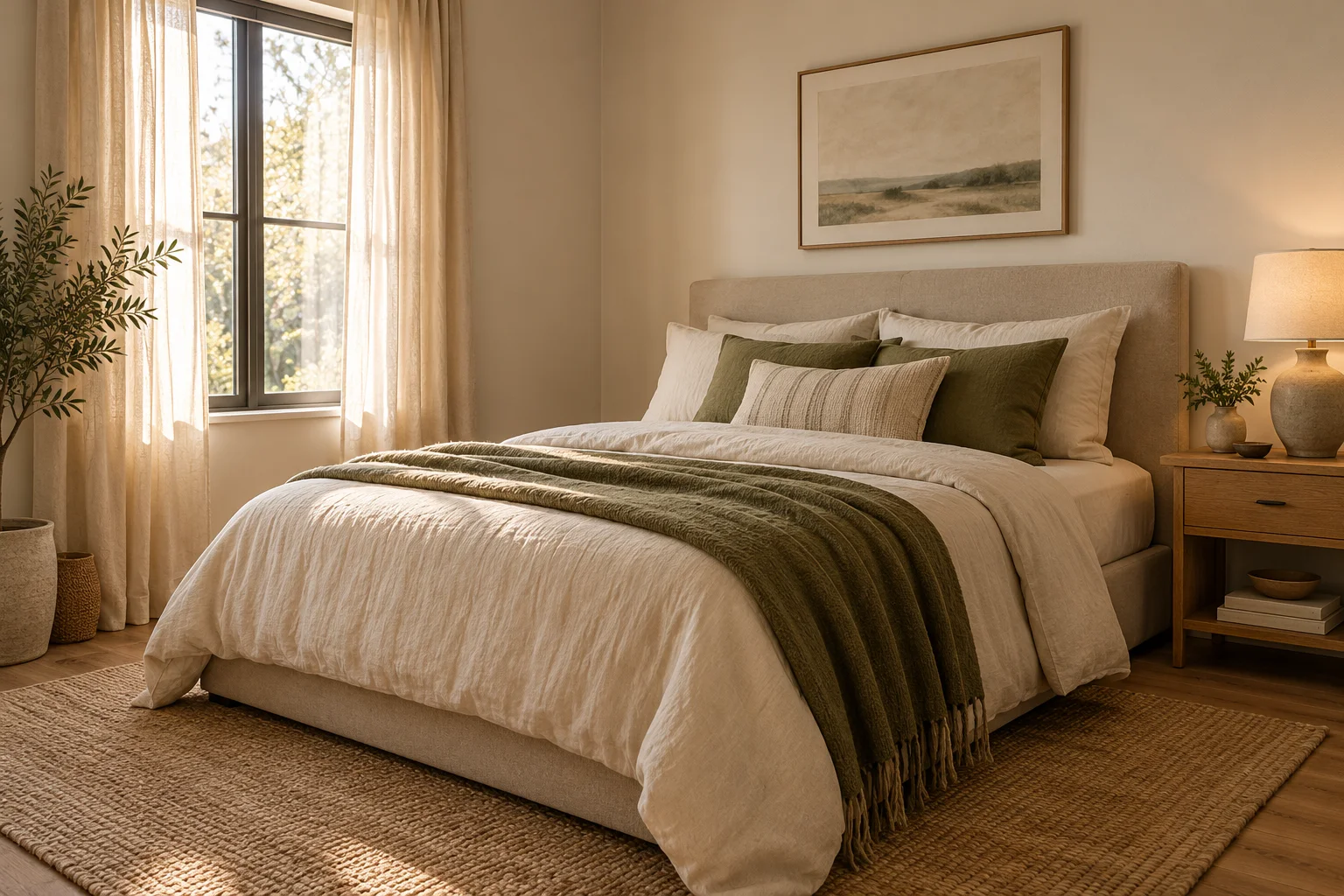
A duvet, a folded throw at the foot of the bed, and two or three cushions create a layered, inviting look without making the bed hard to make each morning. Choose washable covers so the layers stay fresh.
Start with what you already own, then make one small change at a time.
Affiliate link: we may earn a commission if you buy, at no extra cost to you.
Shop this bedroom piece ZonLi Weighted Blanket for Adults 60x80, 20lbs, Dark GreyLayer neutral bedding
One of the easiest ways to give a small bedroom an expensive look is by layering the bed.
Start with neutral sheets, add a duvet or quilt, then introduce a textured throw across the bottom of the bed. Finish with two or three different pillow sizes. Cream, oatmeal, beige, warm white and soft taupe work especially well because they create a calm, hotel-inspired look.
Change Bedding for the Biggest Visual Impact
New bedding transforms a bedroom faster than almost any other change. Choose a duvet cover in a calm, neutral color and add one or two accent cushions.
Choose washable or easy-care materials in high-use areas.
Save it
Pin this for your board
Use the Save button to keep this idea on Pinterest and come back when you are ready to start.