In this article6 sections
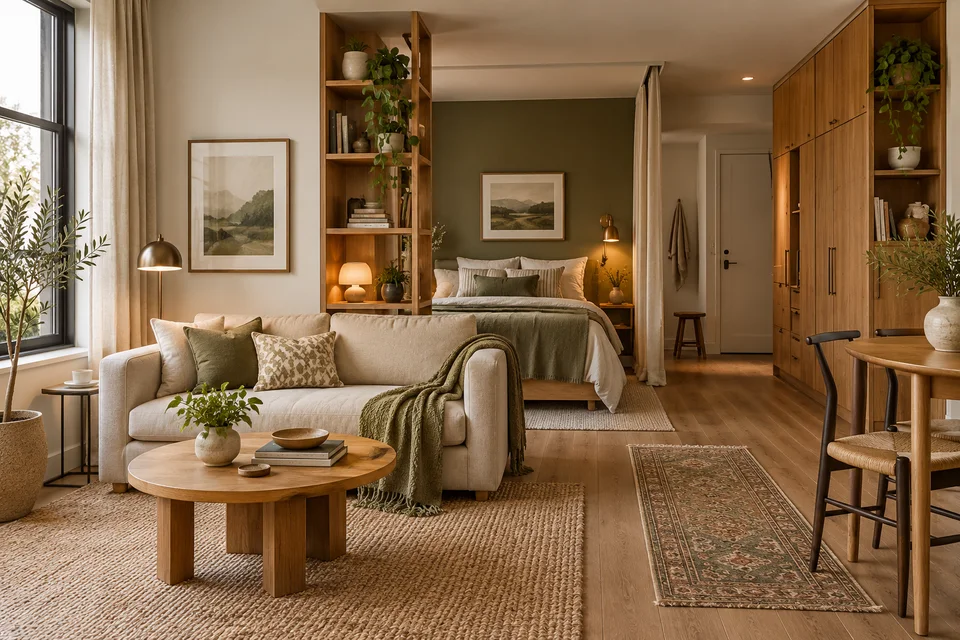
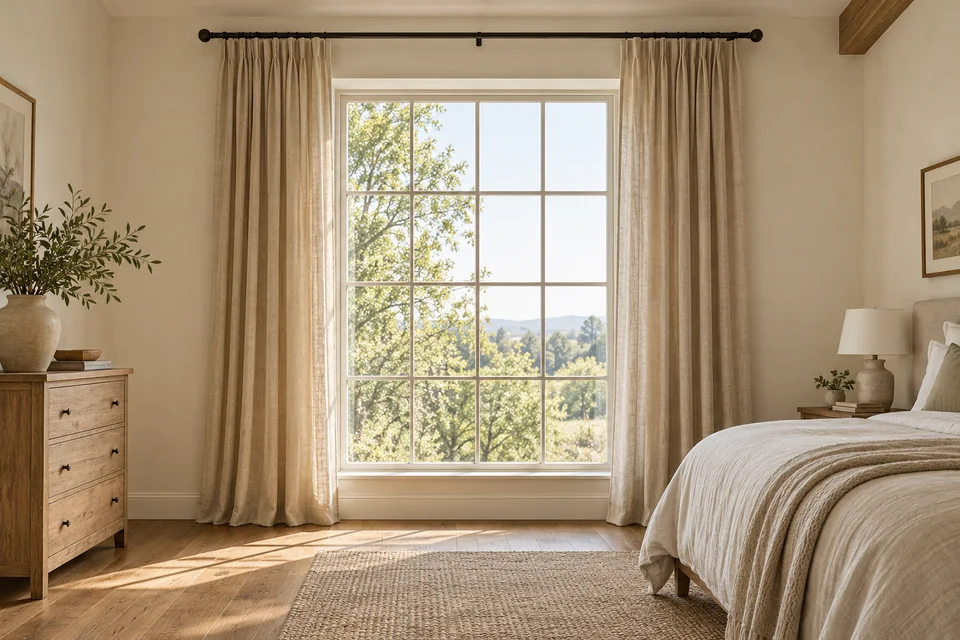
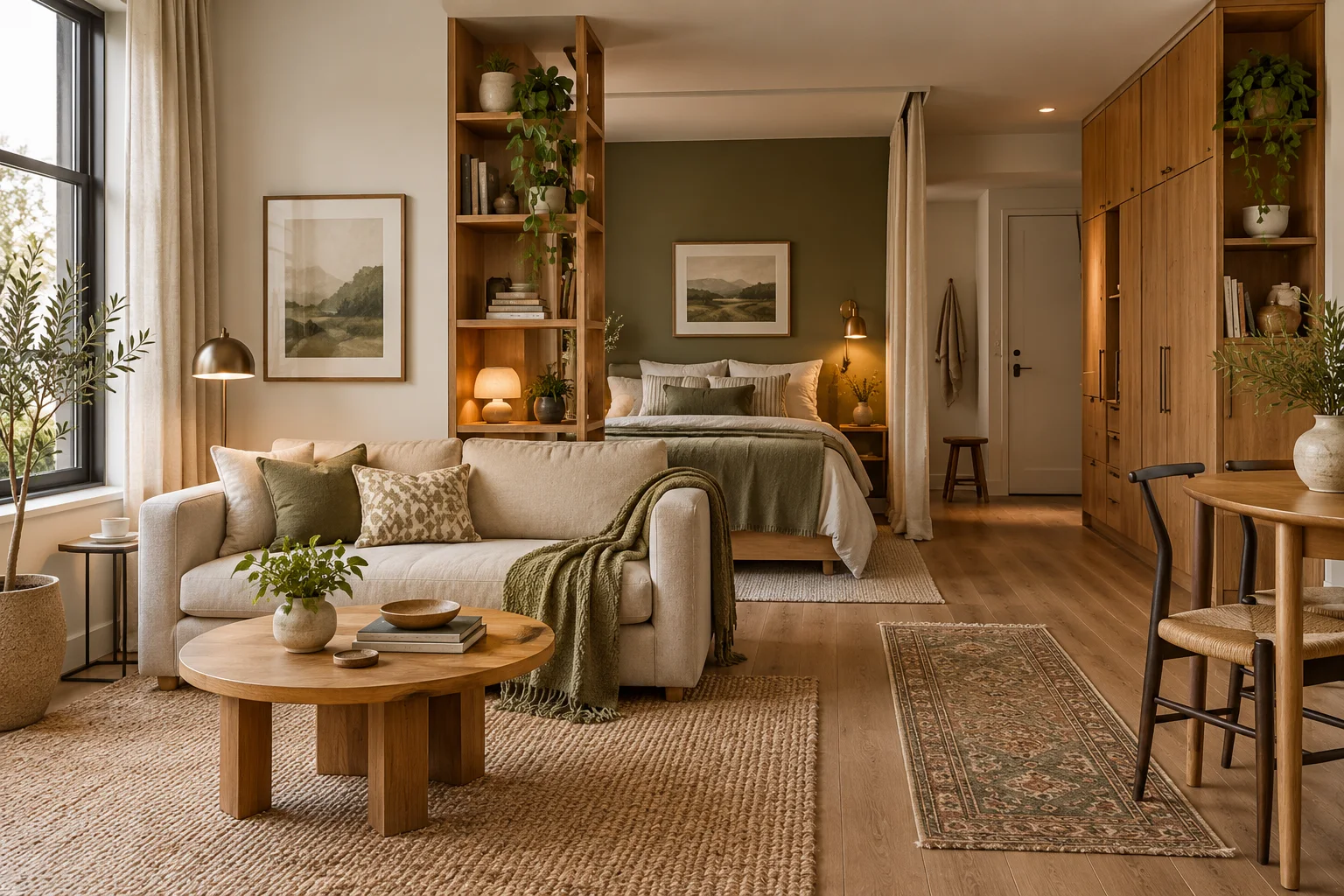
A small bedroom can hold bold colour, several patterns and objects you love. The limit is usually practical space rather than visual ambition: a chair that blocks a drawer or a stack of ornaments where your water glass belongs makes the room harder to use. The photograph above illustrates a look; it is not a room decorated or tested by this publication.
Start with a sketch of your room. Mark the bed, door swing, wardrobe doors, radiator, outlets and the direction in which drawers open. Then note the clear floor you need to get dressed and make the bed. That sketch tells you where colour and display can be generous without asking the floor plan to do more than it can.
Decide what deserves the attention
Choose a feature you see on entering: the bed wall, a large piece of art or a patterned headboard. Build the rest of the room around it. In a narrow bedroom, a patterned wall behind the bed lets the room feel expressive while the walls alongside the bed stay quieter. If the bed wall is interrupted by a window or wardrobe, make the duvet and headboard the focal point instead.
Try a removable paper sample or a large paint swatch before covering a wall. Look at it in morning light and with the lamps you actually use at night. A dark colour can be inviting when the room is lit well; in a room with little daylight, it can also make it harder to find clothes or read. You can keep the drama in bedding and art if painting feels like too large a commitment.
Give different patterns a shared thread
There is no useful rule requiring a fixed number of patterns. A large floral, a narrow stripe and a small check can coexist when they repeat a colour and vary in scale. Start with the strongest print, pull two colours from it, and repeat each colour somewhere else: perhaps in a cushion, a lampshade or a framed print.
Lay the textiles together before buying them. If every pattern has similar scale and contrast, the bed may look busy from the doorway. Replace one with a solid fabric or a texture such as quilted cotton. The solid area gives the eye somewhere to pause and makes the prints easier to notice.
If a patterned wall already carries the room, try plain curtains first. Pattern at the window can work, but it adds another large surface and is harder to change than a pillow cover. For renters, a printed throw, fabric headboard or oversized art can bring the same colour story without touching the wall.
Make the bed the main layer
The bed is often the largest visible surface in a small bedroom. Use that area deliberately: a plain or subtly textured base, one patterned layer and a contrasting cushion are enough to test the palette. Add a second print only after seeing the first arrangement made up in the room.
Choose bedding that you can wash and remake without a complicated routine. A collection of decorative pillows may look good in a photograph but still needs somewhere to go at bedtime. If that place is the floor, reduce the number. A throw folded across the foot of the bed can introduce another colour without adding loose items to manage.
Use vertical space without crowding the route
A narrow shelf or wall mounted light can free a small bedside table. Measure the reach from bed before placing either. Check the shelf depth against your head and shoulders when you sit up, and follow the fixing instructions for your wall type and the load you intend to put on it. In a rental, a slim floor standing bookcase or a lidded bedside cabinet may be the more workable choice.
Keep the top of at least one bedside surface useful. Reserve space for a lamp, water and the object you reach for every night. Put collected ceramics, books or framed pieces on a separate shelf or dresser. Group them by a repeated material or colour, then leave some visible surface around the group so each piece can be seen.
Before adding a trunk or bench at the foot of the bed, open every nearby drawer and wardrobe door. That extra furniture is worthwhile only if it provides storage you use and still lets you move around the bed. Underbed storage may be less decorative, but it preserves the route through a tight room.
Check the room at night
Bold colours and layered fabrics change under artificial light. Use a bedside light for reading and a separate, softer light if you want the rest of the room to glow. Test lamp shades with the bulbs you plan to use; a coloured shade can change the apparent colour of paint and bedding. Keep cords clear of walking routes and use fixtures according to their instructions.
If the room has only one outlet, plan the cable route before buying a second lamp. A plug in wall light may save tabletop space but still needs a safe path for its cord. For a fuller approach to bedtime lighting, see our bedroom lighting guide.
A room plan you can try before buying
- Measure the bed, open drawers and door swings. Mark the floor area you need for daily use.
- Pick one focal point and collect swatches for its main colours. View them in the room at two different times of day.
- Style the bed with what you own. Add one new pattern or colour at a time and photograph it from the doorway.
- Clear the bedside surface, then decide which objects deserve display elsewhere.
- Live with the temporary arrangement for a week before buying shelves, a rug or extra furniture.
The aim is a bedroom that can show personality and still let you open the wardrobe, make the bed and put down a glass. If the furniture plan is the first obstacle, begin with our small bedroom layout ideas before adding more decorative layers.
Save it
Pin this for your board
Use the Save button to keep this idea on Pinterest and come back when you are ready to start.